 Slow overland journeys · Vietnam, Laos, Cambodia
Destinations · Central Vietnam
Hue, after the night train
Hue is where the night train from Hanoi arrives in the morning and where most long trips through Vietnam first slow down. Three or four nights, a river, a citadel and the tombs of the Nguyen emperors.
Hue in brief
Sources: Vietnam National Authority of Tourism — Hue; The Man in Seat 61 — Vietnam (updated 10 Jun 2026); UNESCO World Heritage Centre — Complex of Hué Monuments · checked .
What Hue actually is
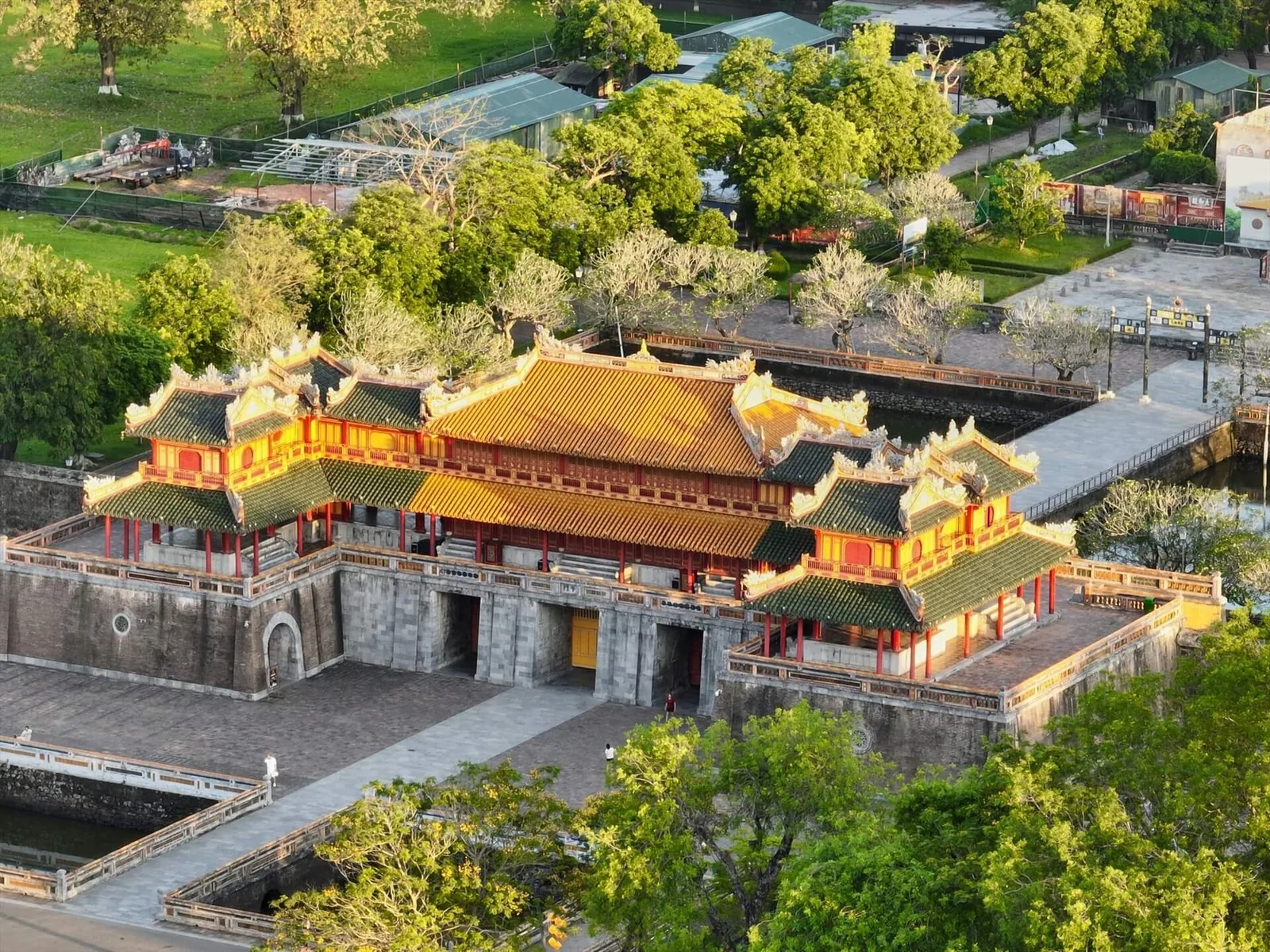
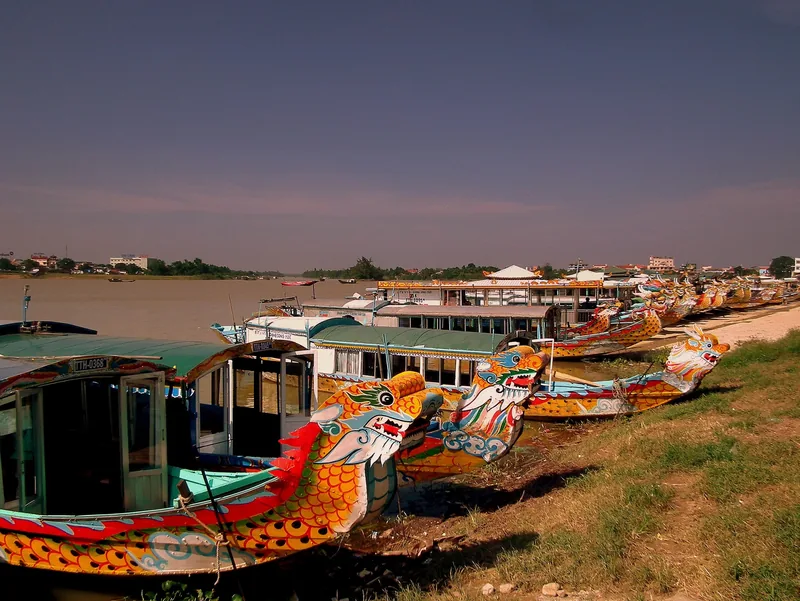
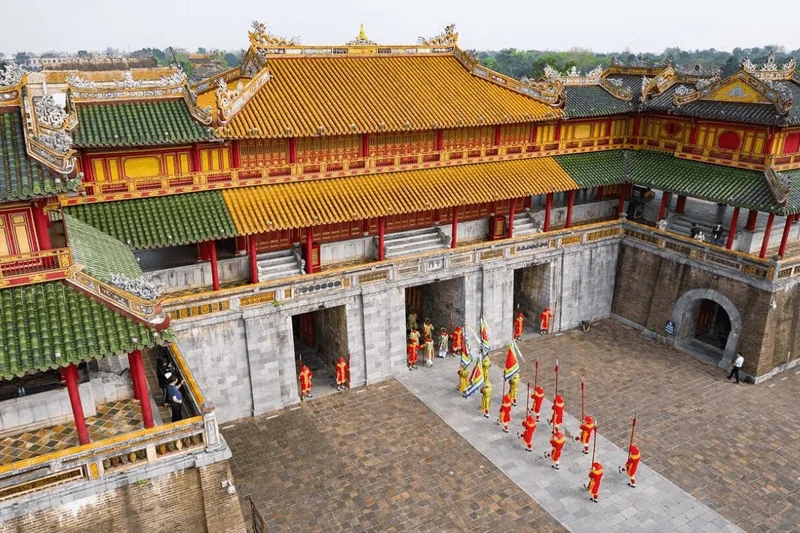
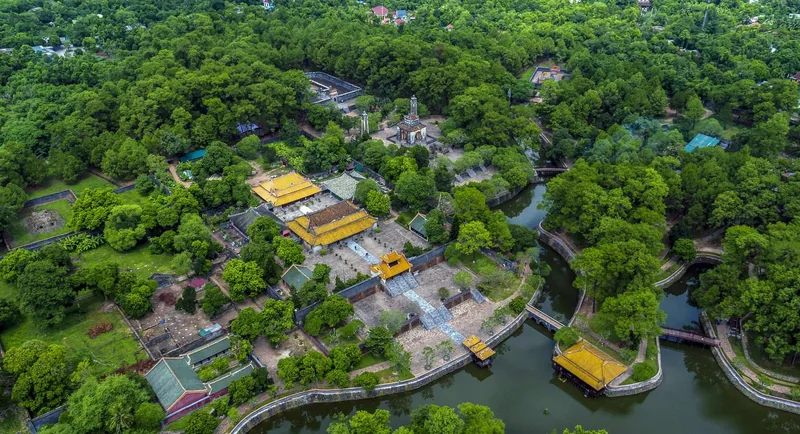
Hue was the capital of a unified Vietnam from 1802 until 1945, under the Nguyen dynasty. What survives is a walled citadel on the north bank of the Perfume River, the Imperial City and the remains of the Forbidden Purple City inside it, and a string of royal tombs and pagodas up and down the river. UNESCO inscribed the complex in 1993, describing a capital laid out according to old cosmological principles around the river.
It is also a working provincial city with traffic, students and a lot of noodle shops, and much of the citadel was damaged in the twentieth century. Parts are restored, parts are open ground with foundations, and the gap between the two is part of what you see. If you arrive expecting an intact palace on the scale of Beijing's, you will be disappointed. If you arrive expecting a slow river city with a great deal of history in its walls, you will not.
For an overland trip, Hue matters for another reason: it is the first stop after the night train out of Hanoi, and the last big city before either the road west into Laos or the train south over the Hai Van Pass.
How many nights, and why fewer fails
We plan three nights on Vietnam by Rail & River and four on The Long Way Round. The arithmetic is simple. The train arrives in the morning after about fourteen hours on board, and most people are not good for much on that first day. The citadel deserves a morning with a guide, before the heat. The tombs are spread along the river and take most of another day. On the four-night version, the last day is empty, because the next leg is the eight-hour road into Laos.
Two nights means the citadel on the day you got off the train, or the tombs skipped. One night is a stop, not a stay — and on a long trip, that is exactly the kind of night that wears you down by week three.
When to go, and when not to
3 = kindest, 2 = workable, 1 = hard (floods, heavy rain or strong heat). Based on the seasons below.
The national tourism authority puts the kindest months at February to the end of April. June and July are hot and humid. The rains start in August and can last into January, and the city often floods from October to the end of the year.
The flood months are not a reason to skip Hue on a long trip, but they are a reason to keep the plan loose: we swap the citadel and tomb days to follow the forecast and keep a spare day.
Sources: Vietnam National Authority of Tourism — Hue · checked .
Getting there without flying
- From Hanoi: the SE night trains, about fourteen hours, evening to morning. We book four-berth soft sleepers.
- From Da Nang or Hoi An: the day train over the Hai Van Pass, about two and a half hours — the stretch of the line that runs along the cliffs above the sea.
- From Laos: the international bus from Savannakhet via the Lao Bao border, about eight hours.
- If you do fly: Phu Bai airport is about thirty minutes from the city; Da Nang about two hours by road.
Timetables are on the Vietnam Railways ticketing site; we check the departure for your dates before we book. The full leg table is on the overland legs page.
Sources: The Man in Seat 61 — Vietnam (updated 10 Jun 2026); Vietnam Railways ticketing, dsvn.vn; Travelfish — Savannakhet transport; Vietnam National Authority of Tourism — Hue · checked .
What it costs to be here
The train in is the cheapest part. One published guide quotes the whole Hanoi–Saigon line in a soft sleeper at roughly VND 1,026,000 to 1,758,000 per berth, depending on the train and berth; the Hanoi–Hue section is part of that, so less. Check before you travel.
Hotels in Hue cover a wide range, from family guesthouses to larger riverside hotels; we quote by name. Food is inexpensive by any Western measure. Entrance tickets for the citadel and the tombs are sold separately at each site and change from time to time, so we give you the current figures before you go rather than quote old ones.
Sources: The Man in Seat 61 — Vietnam (updated 10 Jun 2026) · checked .
When to skip Hue
- If your Vietnam time is under ten days and you are flying between cities, Hue is a long detour for two nights.
- If you cannot shift days around in the flood months, October to December.
- If imperial history does not interest you: the river and the food are good, but they are not reason enough on their own for four nights.
Pictures
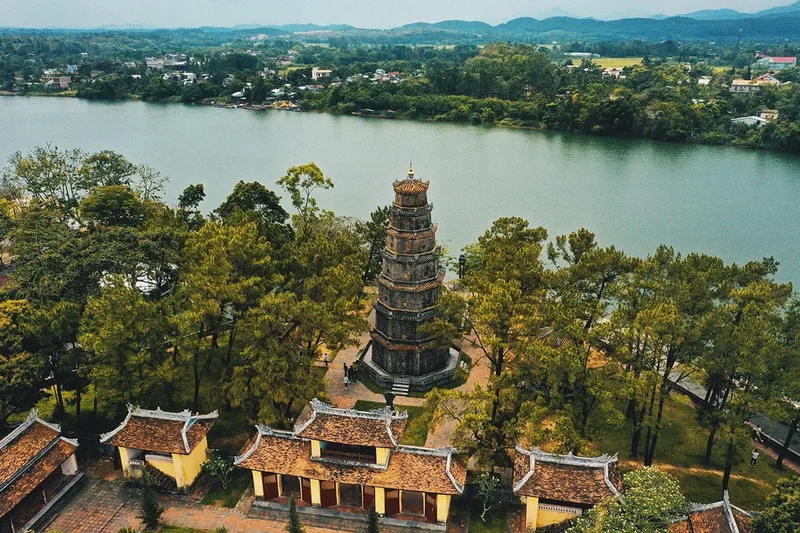
Journeys that stop in Hue
The Long Way Round: Hanoi to Angkor Overland — four nights, then the road into Laos.
Vietnam by Rail & River — three nights, then the day train over the Hai Van Pass.
Common questions
Questions travellers ask most
Is one day enough for the citadel?
A guided morning covers the main gates, the Imperial City and what remains of the Forbidden Purple City. Go early; the afternoon heat is hard work most of the year.
Which side of the train for the Hai Van Pass?
The sources we use do not say, so we do not promise a side. Book a window seat and use the corridor windows when the coast appears.
Can we cycle to the tombs?
Some of them, yes, if you are used to traffic. Most people take a car one way and a boat the other.
Does Hue flood every year?
It often floods between October and the end of the year. How badly varies from year to year.
Related
Read next
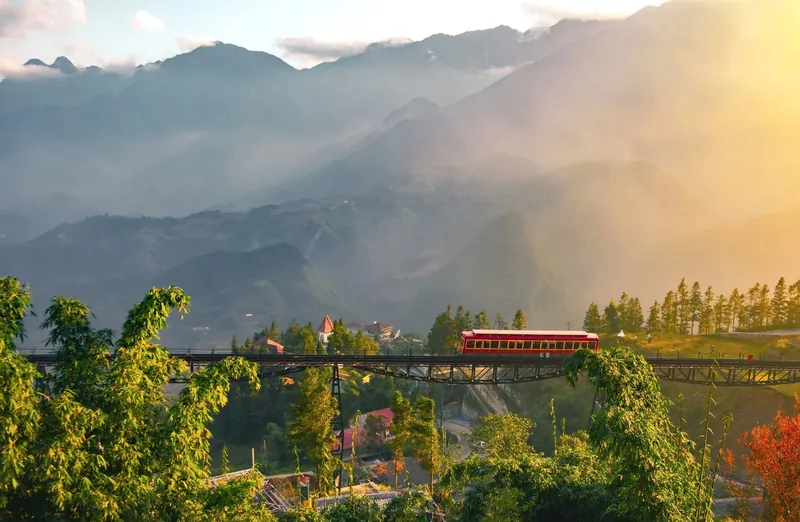
Example journey
Hanoi to Angkor overland
30 days, three countries, no internal flights: Hanoi to Angkor by rail, road and river.
View this journey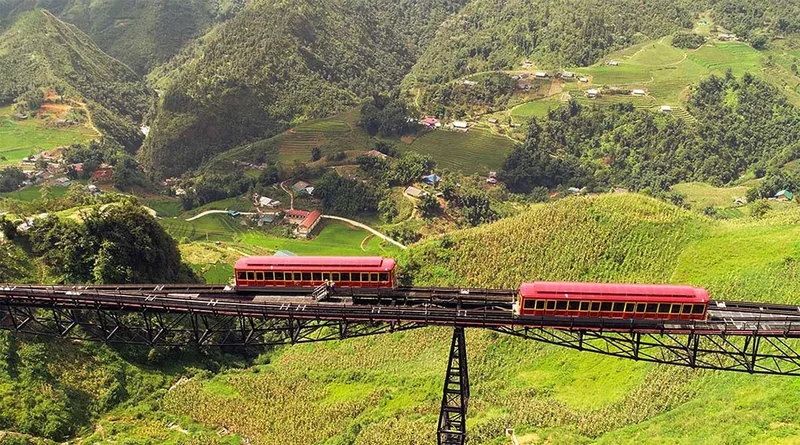
Example journey
Vietnam by rail and river
21 days, one country: the whole north–south railway and a week on the Mekong Delta.
View this journey
Destinations
Destinations
The four long stops of our journeys, and the shorter stops between them.
View this journey
Plan · Overland legs
Overland legs
The leg table: hours, mode, comfort and relative cost for every overland leg we use.
View this journey
Plan · Pacing
Pacing a long trip
Rest days, laundry stops, where to stay longer, and the seasons along a long route.
View this journey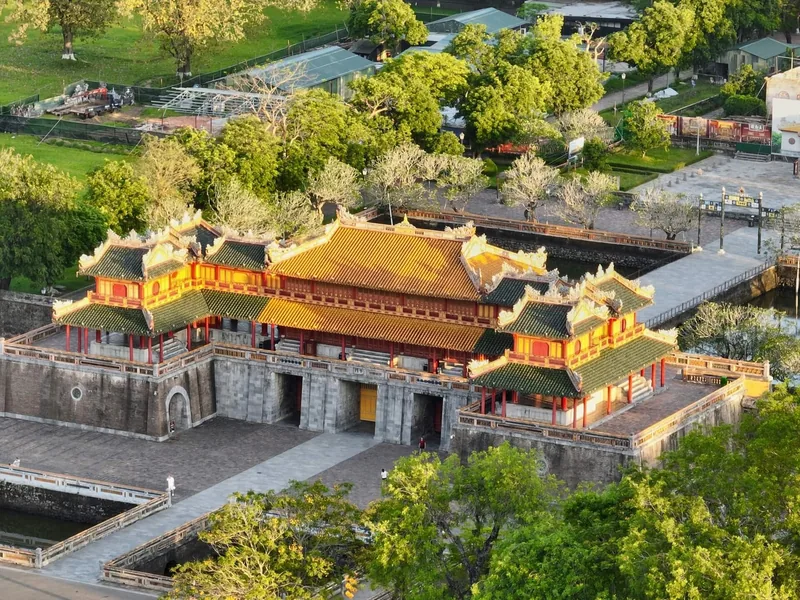
Start planning
Tell us about the long trip you have in mind
Weeks available, month and party size are enough to start. You get questions first, then a leg-by-leg outline, not a brochure.