 Slow overland journeys · Vietnam, Laos, Cambodia
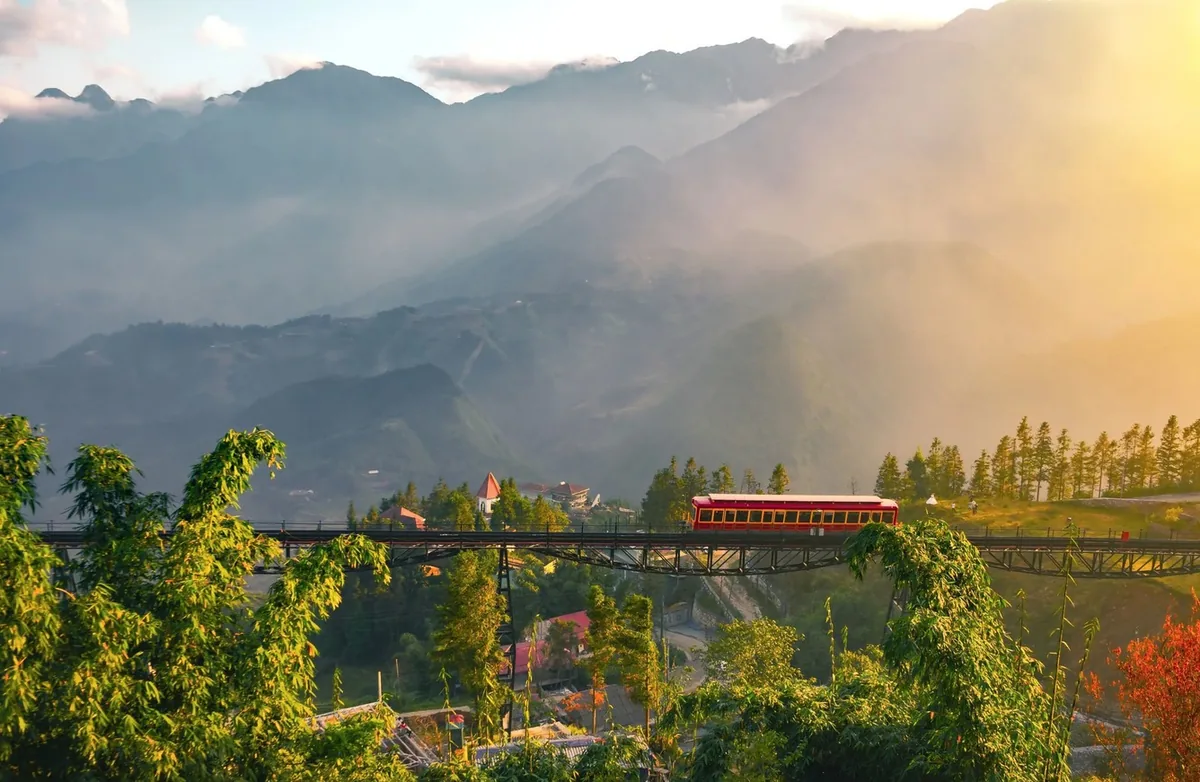
Journeys · 30 days · Vietnam, Laos, Cambodia
The Long Way Round: Hanoi to Angkor overland
Thirty days from Hanoi to Siem Reap without a single internal flight: the night train to Hue, the road over the Annamite range into Laos, the Mekong south through Champasak and the 4000 Islands, and the river road through Cambodia to Angkor.
At a glance
- Duration
- 30 days, 29 nights
- Travelling
- Private, your party only
- Starts
- Hanoi, Vietnam
- Ends
- Siem Reap, Cambodia
- Internal flights
- None
- Price
- On request, per trip
Who this journey is for
This is for travellers with a full month who want to cross all three countries on the ground and see how they connect: the same river, the same Khmer temple builders, very different borders. It suits people who have travelled in Asia before, who can sleep on a train, and who would rather spend four nights in a place with a slow afternoon in it than two nights with a guided programme from breakfast to dinner.
The trip has nine stops. The longest legs are the night train out of Hanoi, the international bus from Hue into Laos, and the day that takes you from the Lao islands across the land border into Cambodia. Each of those is followed by at least one day with nothing booked.
The journey, leg by leg
Days 1–3
Hanoi: arrive, sleep, walk
You arrive on your own international flight; a driver meets you and takes you to a hotel in or near the Old Quarter. Day 2 is a half-day walk with a guide through the Old Quarter and the lanes around Hoan Kiem Lake, ending at a lunch you choose. Day 3 is free. Jet lag on a long trip is worth respecting: the first long leg is a night on a train, and you want to start it rested.
Day 4
The night train south to Hue
Waking up to rice fields and the first sight of the central coast
The SE trains of the north–south railway take about fourteen hours from Hanoi to Hue, leaving in the evening and arriving the next morning. We book a 4-berth soft-sleeper compartment; for two travellers we can book all four berths so the compartment is yours. Bring a light layer: the air-conditioning runs cold.
Days 5–8
Hue: four nights in the old capital
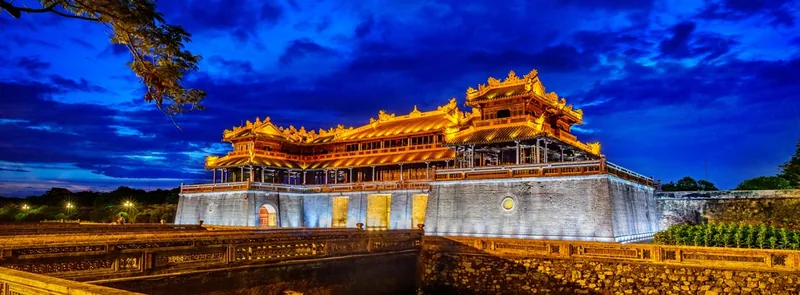
Hue was the capital of a unified Vietnam from 1802 to 1945 under the Nguyen dynasty, and its citadel, palaces and royal tombs are inscribed by UNESCO. Day 5 is for sleep after the train. On day 6 a guide takes you through the citadel and the Imperial City in the morning, when it is cooler. Day 7 is the tombs along the Perfume River by car and boat. Day 8 is empty — our first planned rest and laundry day.
Day 9
Hue to Savannakhet, across the Lao Bao border
The longest road day of the trip. The international bus between Hue and Savannakhet runs about eight hours, crossing the Annamite range and the Lao Bao – Dansavanh border; we can arrange a private car to the border instead, with the bus or a Lao-side vehicle after it. Have your Lao visa arranged before this day. Do not rely on getting one at the border.
Day 10
Savannakhet: a day off
Nothing booked. Savannakhet sits on the Mekong across from Thailand, and its old town of shuttered shophouses is quiet enough to walk without a plan. After the border day this is the point where most people simply sleep.
Days 11–13
South to Champasak and Vat Phou
About five hours by road to Pakse, then the last stretch south to Champasak, a one-street town on the west bank. Day 12 is Vat Phou, a UNESCO-listed Khmer temple complex laid out along an axis of about ten kilometres from mountain to river; go early, before the heat. Day 13 is free.
Days 14–17
Si Phan Don: four nights in the islands
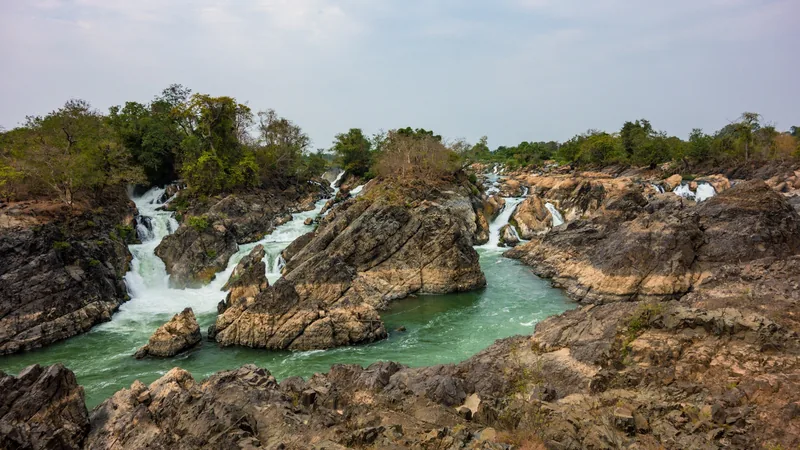
Road to the landing at Ban Nakasang, then a short boat across to Don Det or Don Khon. Four nights is deliberate: the islands are where this route stops moving. Rent bicycles, see the Li Phi falls on Don Khon, take a boat out at dusk. Laundry here is done by guesthouses and dries in a day in the dry season.
Days 18–20
Across into Cambodia, to Kratie
A boat back to the mainland, then the Nong Nok Khiene – Trapeang Kriel border, where there is no public transport that runs only to the post — we arrange a vehicle on each side. About an hour and a half to Stung Treng, then four to five hours to Kratie, longer in the rainy season. Days 19 and 20 are slow: the riverbank, the market, and a morning boat on the stretch of river where Cambodia's remaining Mekong dolphins live.
Days 21–24
Phnom Penh
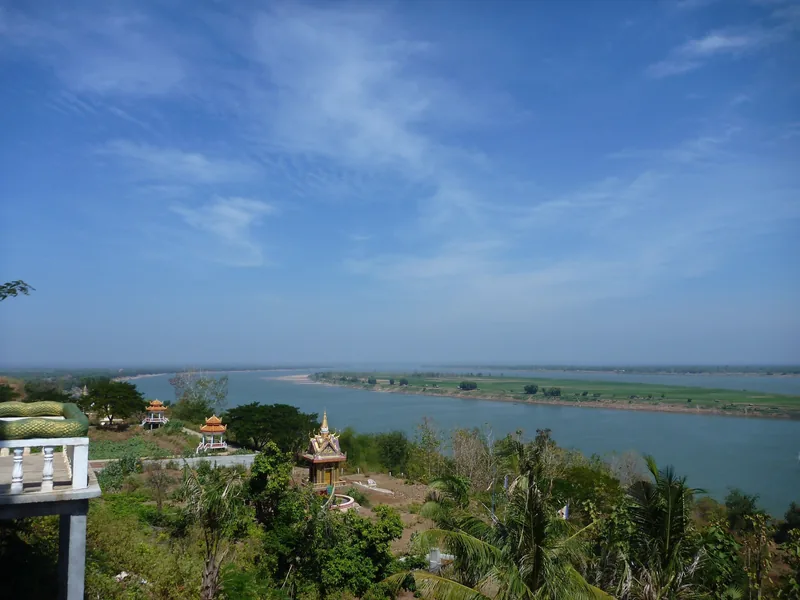
A full day by road down the Mekong to the capital. Four nights here give you a guided morning at the Royal Palace and the National Museum, a second morning for the city's recent history if you want it, and two days unplanned. This is the second laundry stop.
Days 25–29
Siem Reap and Angkor
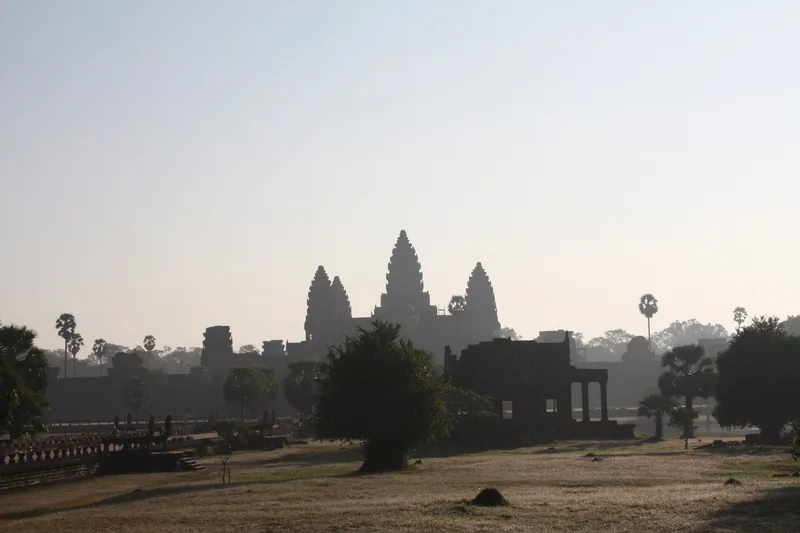
Coach or private car to Siem Reap, about six and a half hours. Angkor holds the remains of the capitals of the Khmer Empire from the 9th to the 15th century, across some 400 square kilometres. Three temple days with a guide, starting early and stopping by midday, and two days off between them. Five nights is not too many.
Day 30
Leave from Siem Reap
A driver takes you to the airport for your onward flight, which is not part of the trip.
Sources: The Man in Seat 61 — Vietnam (updated 10 Jun 2026); Travelfish — Savannakhet transport; Border Crossing Hub — Dansavanh / Lao Bao (Sep 2026); Backpack Adventures, 4000 Islands guide (modified 29 May 2026); Wikivoyage — Stung Treng; The Man in Seat 61 — Cambodia (updated 6 Jun 2026); UNESCO World Heritage Centre — Complex of Hué Monuments; UNESCO World Heritage Centre — Vat Phou, Champasak; UNESCO World Heritage Centre — Angkor; Mongabay, April 2022 · checked . Leg times are approximate; we confirm each one against the operator before you travel.
The trade-offs of doing this without flying
| Leg | Overland | If you flew instead | Our view |
|---|---|---|---|
| Hanoi → Hue | One night on the train | A short flight plus airport time | Take the train; you save a hotel night and lose nothing |
| Hue → Savannakhet | About 8 h by road with a border | No sensible direct flight | Overland is the only practical way |
| Savannakhet → Champasak | About 5 h to Pakse, then a short drive | No direct flight | Road |
| Islands → Kratie | About 7–8 h with a land border | Not possible | Road; rest day planned after |
| Phnom Penh → Siem Reap | About 6.5 h by road | A short flight | Road is fine; flying saves most of a day |
The full table with sources and check dates is on the overland legs page.
Price
| Travelling party | Comfortable rooms, named hotels | Larger rooms, river or garden views |
|---|---|---|
| Private, 1 traveller | On request | On request |
| Private, 2 travellers | On request | On request |
| Private, 3 – 4 travellers | On request | On request |
| Private, 5 – 6 travellers | On request | On request |
What moves the price of this journey most: the number of travellers sharing private cars on the four long road days; whether you want the train compartment to yourselves; and the hotel level in Hanoi, Phnom Penh and Siem Reap, where the range is widest. The pricing page sets out the third-party costs we can source, and how to book explains the steps.
What the price includes
- 29 nights in named hotels and guesthouses as listed, with breakfast
- Night train Hanoi–Hue in a 4-berth soft sleeper
- Road legs by bus or private car as quoted, with border-side vehicles arranged
- Boats to and from the islands of Si Phan Don
- Guides on the Hanoi walk, the Hue citadel and tombs, Vat Phou, Phnom Penh and three Angkor days
- Airport transfers on arrival and departure
- A printed leg sheet with every departure time, confirmed before you travel
What it does not include
- International flights
- Visas for Vietnam, Laos and Cambodia, and any border fees
- Travel insurance
- Lunches, dinners and drinks
- Temple and site entrance tickets, including the Angkor pass
- Laundry, tips and personal spending
Who this journey is not for
- Travellers with less than four weeks. Cutting nights from this route turns it into a series of road days.
- Anyone who cannot manage a steep ladder to an upper berth or a sloping riverbank to a boat.
- Travellers who need air-conditioning that works every night: on the islands and in Kratie, rooms are simple and power cuts happen.
- Anyone travelling between about August and December who is not willing to move dates around: rain in central Vietnam and high water on the Mekong both affect this route.
- Travellers who want a fixed-date group. This is private only.
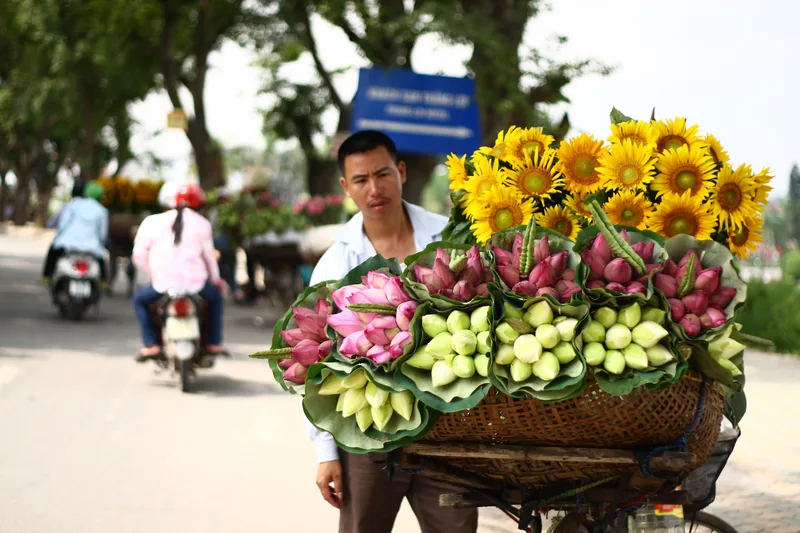
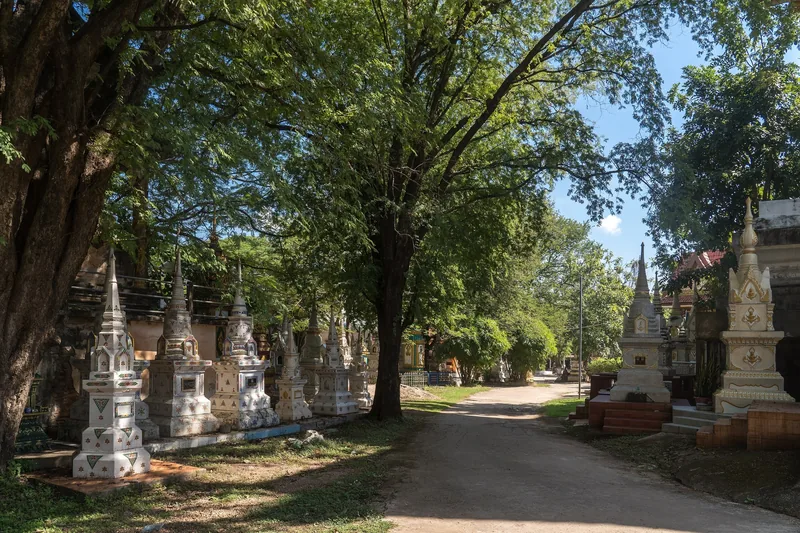
Pictures from the route
Common questions
Questions travellers ask most
Which visas do I need, and in what order?
Vietnam first, Laos second, Cambodia third. Arrange the Lao visa before you reach the Lao Bao border, and check the official e-visa portal of each country for which land crossings accept an e-visa — the list changes.
We send a visa checklist with the leg sheet, but the visas themselves are yours to obtain.
Can we do it in the other direction?
Yes. Siem Reap to Hanoi works the same way. The only change is that the hardest border day comes early, so we move a rest day forward.
Is the night train safe and comfortable?
Most travellers sleep reasonably in a 4-berth soft sleeper. It is not a hotel: the toilets are shared at the end of the carriage and the train stops at stations through the night. For two people we can book the whole compartment.
What if a border or road is closed?
We reroute and tell you before you reach it. The planned rest days are where a lost day is absorbed without moving every booking after it.
Related
Read next
Journeys
Journeys
All four journeys side by side: days, legs, flights and who each one suits.
View this journey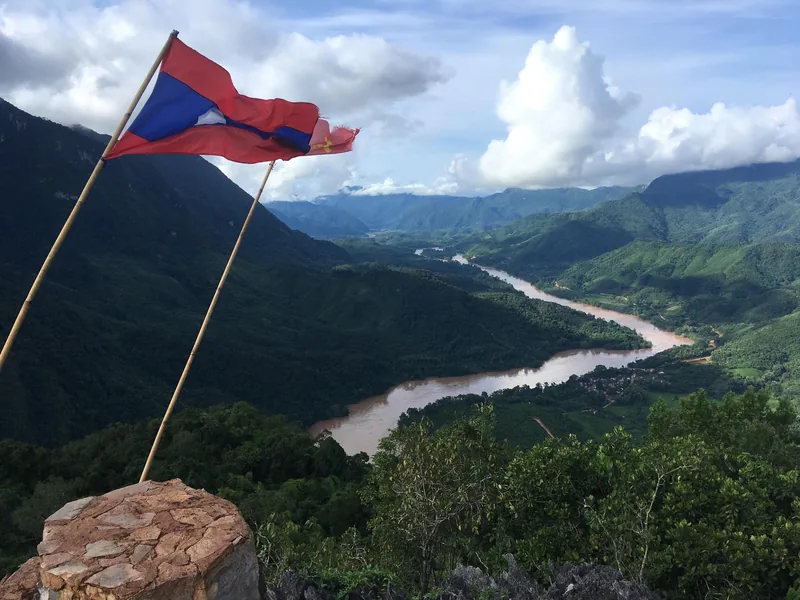
Plan · Overland legs
Overland legs
The leg table: hours, mode, comfort and relative cost for every overland leg we use.
View this journey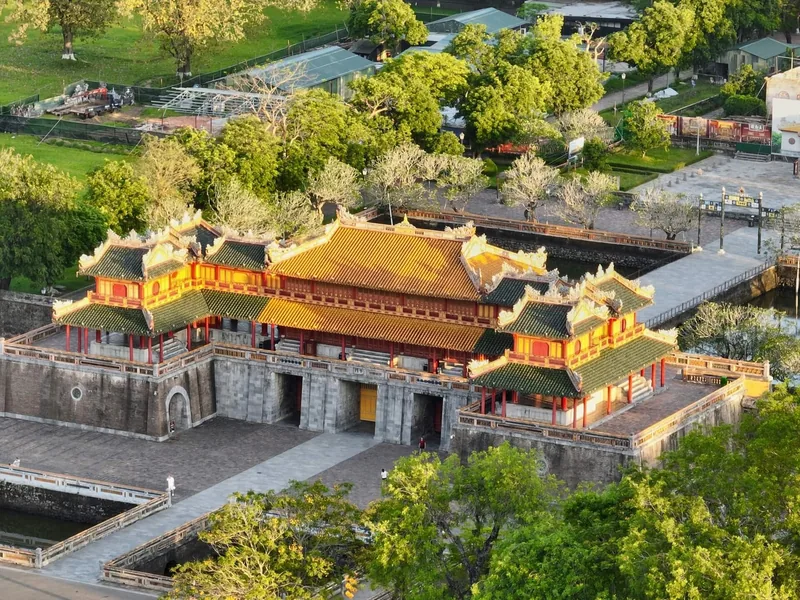
Destinations · Central Vietnam
Hue
The old imperial capital on the Perfume River: three to four nights after the night train.
View this journey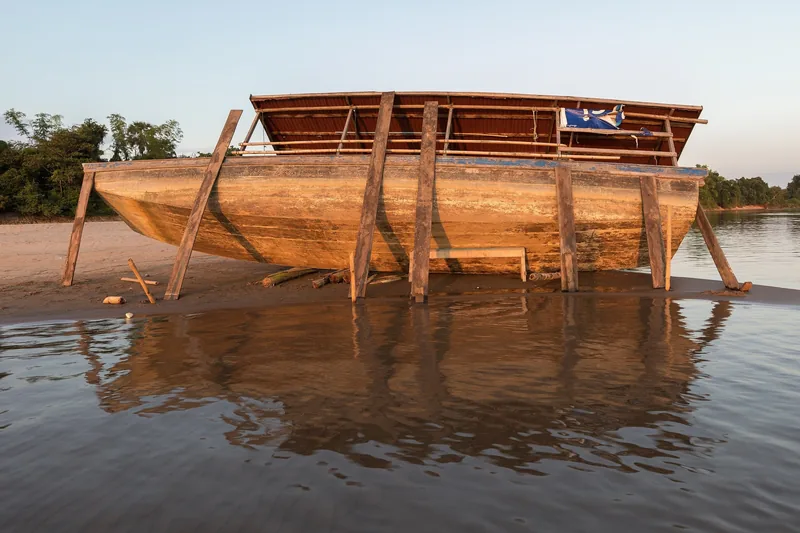
Destinations · Southern Laos
Si Phan Don
Four nights in the islands at the bottom of Laos: bicycles, waterfalls and very little else.
View this journey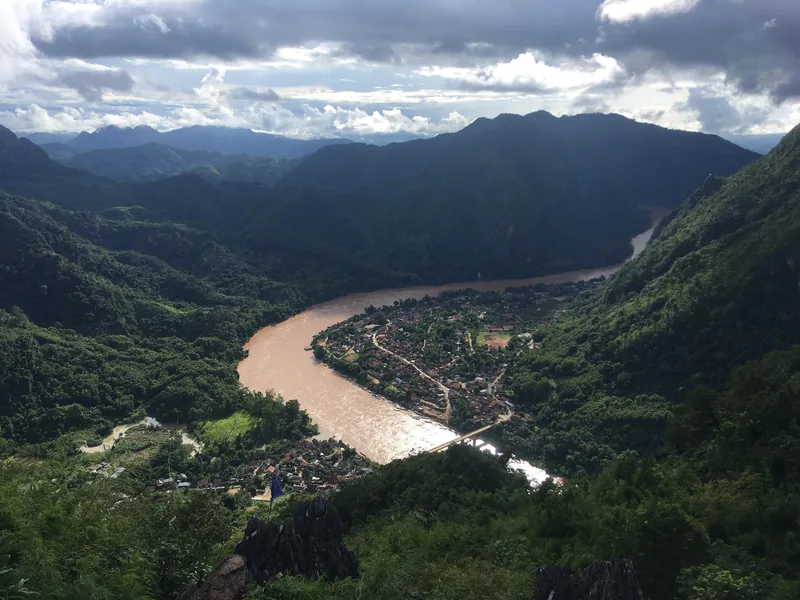
Journeys · Prices
Prices
How we price a three-to-five-week private journey, and the third-party fares behind it.
View this journey
Journeys · How to book
How to book
The steps from the first form to the printed leg sheet, and what we need at each one.
View this journey
Start planning
Tell us about the long trip you have in mind
Weeks available, month and party size are enough to start. You get questions first, then a leg-by-leg outline, not a brochure.